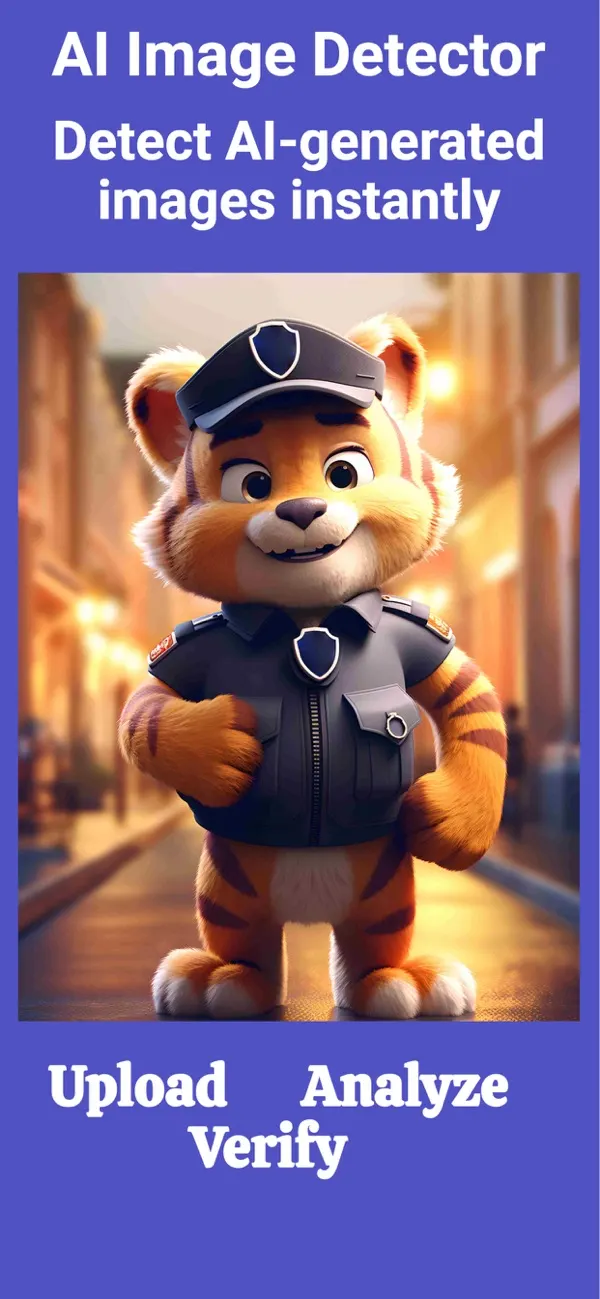

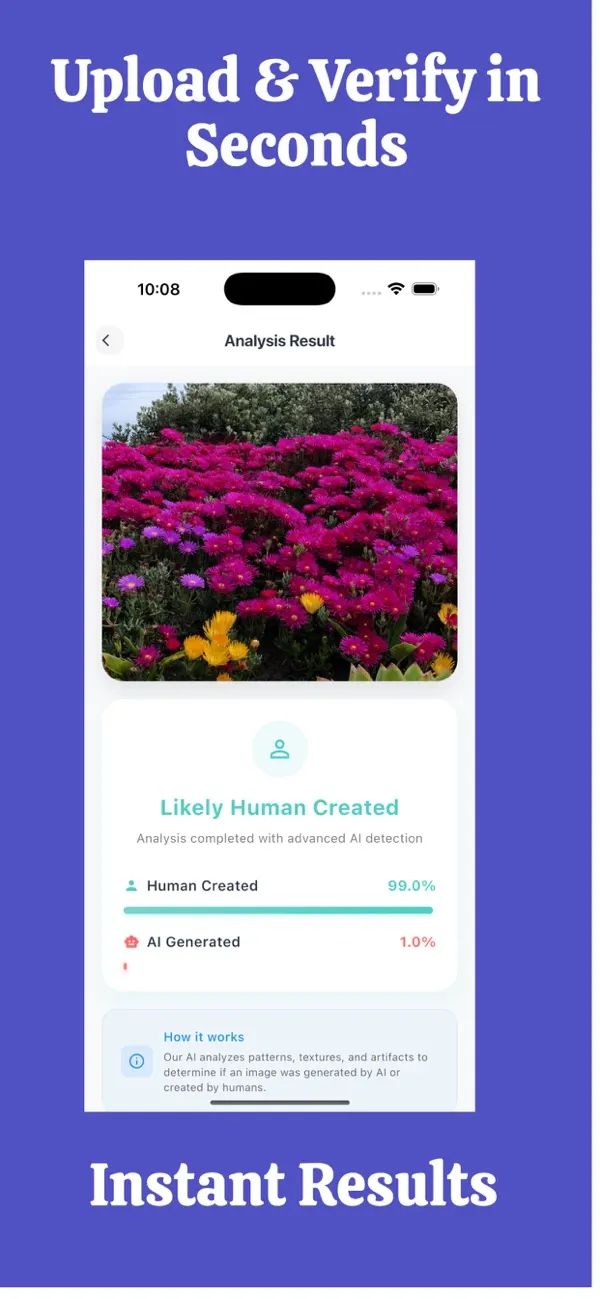
Screens are examples. Results are estimates and can be wrong.
Short answer: in this scam, a stranger contacts you after seeing your lost-pet post, claims to have found your pet, then asks for money (a "reward", "vet fee" or "transport fee") before showing proof. Do not pay in advance, insist on meeting in a public place, and check any photo they send. Results from any photo tool are estimates and can be wrong.
How does the "I found your pet" scam work?
- You post a lost-pet notice on social media, a community group or a flyer.
- A stranger replies, often quickly, saying they have your pet.
- They send a photo, sometimes a picture copied from your own post or an unrelated animal, or an AI-generated image.
- They cannot meet. They are "out of town", "at the vet" or "on a trip".
- They ask for payment first: a transport fee, a vet bill, a reward or a deposit to a bank account or a gift card.
- After you pay, new fees appear, or the person vanishes.
What are the red flags?
- The person asks for money before you can see or hold your pet.
- They avoid a live video call or a meeting in a public place.
- They do not mention details only a finder would know, or they ask you to describe the pet's markings.
- They push you to pay by transfer, gift card or crypto, and to hurry.
- The photo looks too perfect, shows a different background each time, or matches photos you posted yourself.
- Their story keeps changing, or they contact you from a brand-new account.
How do I check the photo they send?
- Compare with your pet. Look at specific markings, collar, scars, ear shape and fur pattern. Do not describe these first; ask the person to describe your pet.
- Look at the setting. Is it a real home, car or vet room? Ask for a new photo with a detail you choose, such as today's newspaper or a hand giving a thumbs-up.
- Reverse image search. If the photo appears elsewhere, it is not theirs.
- Run an AI check. Use FakeSpot: AI Image Detector on your iPhone to estimate whether the picture was made by AI. A high score is a warning sign. A low score does not prove the pet is yours, and results can be wrong.
What safe steps should I take?
- Ask for a live video call that shows your pet and the person together.
- Suggest meeting in a public place, or at a vet clinic that can scan your pet's microchip.
- Never send money, a deposit or a gift card in advance. Genuine finders rarely demand payment before returning an animal.
- Offer to pay a reward only in person, after you have your pet.
- Bring a friend, and tell someone where you are going.
- Keep your own post free of one identifying detail, such as a particular mark, so you can test the finder.
What should I do if I think it is a scam?
- Stop paying and stop sharing personal details.
- Screenshot the messages, the profile and any payment requests.
- Report and block the account on the platform.
- If you paid, contact your bank or payment provider immediately.
- Warn the local community group, so others do not fall for it.
Keep searching in the meantime: contact local shelters and vets, and check microchip databases. The same photo habits apply to seller listings and dating profiles.
How can I improve my chances of a genuine reunion?
- Get your pet microchipped and keep the registration details current.
- Post a clear lost-pet notice on local community pages, and tell nearby vets and shelters.
- Put your phone number, not your home address, on flyers.
- Ask neighbours to check sheds, garages and gardens.
- Use the same caution with every message, even from people who seem kind.
Most people who contact you will be honest, and a few simple precautions let you welcome their help without risking your money.
Frequently asked questions
Is "I found your pet" always a scam?
No. Many finders are kind and honest. The warning sign is a demand for money before you see your pet, or avoiding a live video call or public meeting.
Should I pay a reward to someone who says they found my pet?
Only in person, after you have your pet safely back. Never pay in advance by transfer, gift card or crypto.
Can an app tell if the pet photo is real?
An AI image checker can estimate whether a photo was made by AI. It cannot confirm that a real photo shows your pet. Results are estimates and can be wrong.
How can I test a finder safely?
Ask them to describe a marking only you know, request a fresh photo with a detail you choose, and ask for a live video call.
What should I do if I already paid?
Contact your bank or payment provider straight away, keep screenshots, report the account to the platform, and tell local authorities.
Related pages
About the author
Praful Deshmukh is the founder of AppVeda Software, which builds and publishes FakeSpot and other iPhone apps. His apps on the App Store
 FakeSpotSpot AI-generated & fake photos
 ImagineTurn text into stunning AI art
 AI Skin ScannerScan your skin from a selfie
 India AQILive air quality for Indian cities
 AI Video DetectorIs that clip real or AI?