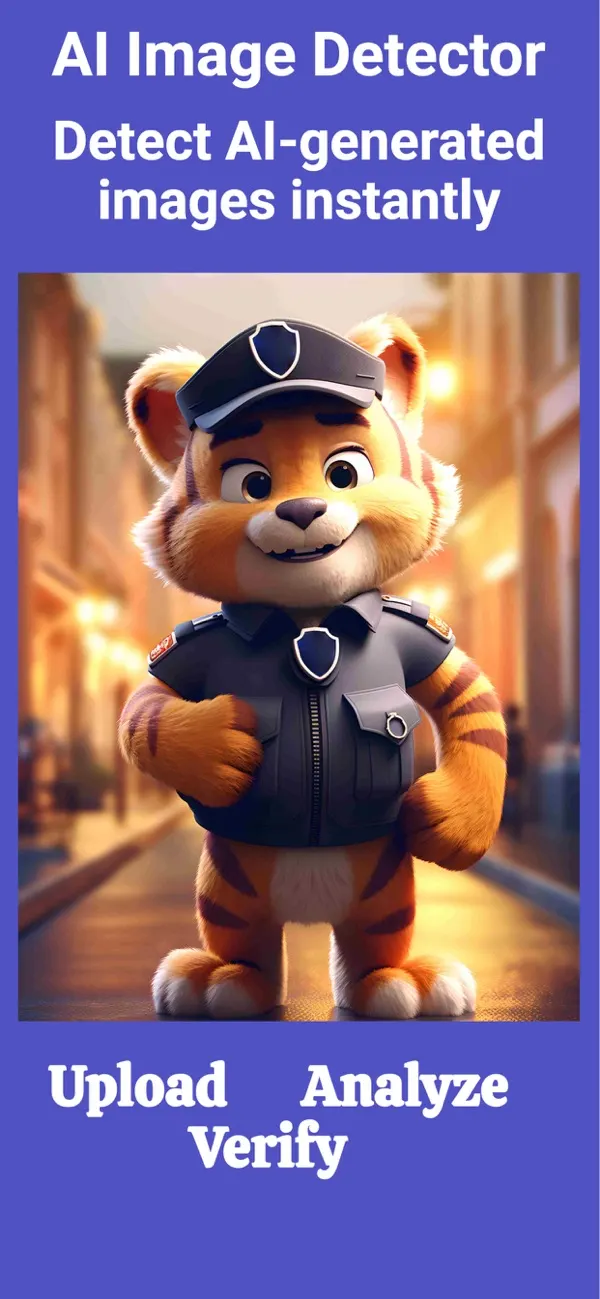

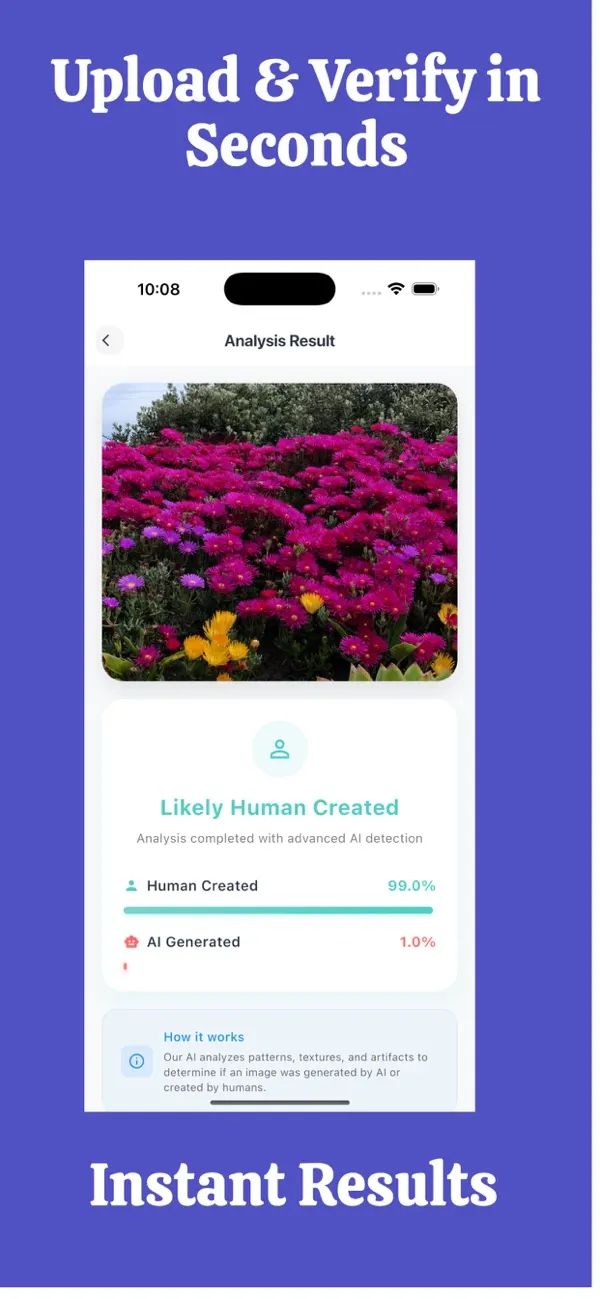
Screens are examples. Results are estimates and can be wrong.
Short answer: to check a dating photo, look at the profile as a whole, run a reverse image search, ask for a live video call, and run the photo through an AI image checker such as FakeSpot. Whatever the results, never send money to someone you have not met in person.
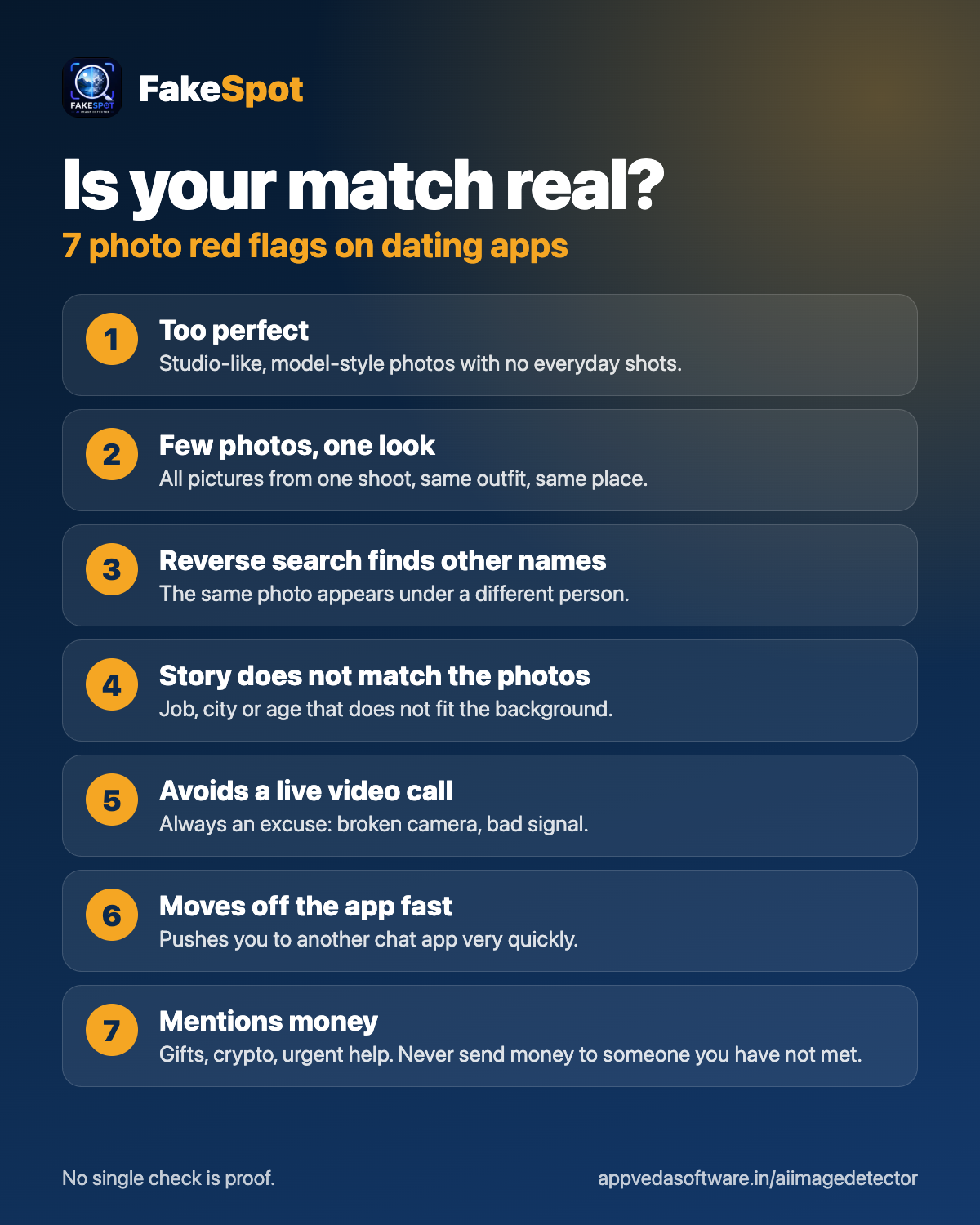
What are the red flags on a dating profile?
- Photos that look like a model shoot, with perfect lighting in every picture.
- Very few photos, or pictures that do not show the same person clearly.
- A very new account with an emotional story and fast declarations of love.
- Refusing a live video call, with constant excuses about a broken camera or a bad connection.
- Claims of working abroad (military, oil rig, doctor) that keep them from meeting.
- Pressure to move the chat to a private messaging app quickly.
- Any request for money, gift cards, crypto or "investment" help.
How do I check a dating profile photo step by step?
- Save the photo. Keep the original image from the profile or chat.
- Reverse image search. If the same photo appears under another name, it is likely stolen.
- Check for AI. Run it through FakeSpot on your iPhone for an estimate and a confidence score. Zoom in on hands, jewellery, text and backgrounds.
- Compare the set. Do all photos show the same face, age and surroundings?
- Ask for a live video call. A real person can do this. A scammer will usually avoid it.
- Ask for a new photo. For example, a selfie holding a handwritten note with today's date. AI and stolen photos struggle with specific, fresh requests.
How does FakeSpot help?
FakeSpot: AI Image Detector estimates whether a photo was made by AI and shows a confidence score. That helps with one kind of risk: a face that never existed. It does not detect stolen real photos, and it cannot tell you whether the person behind the profile is honest. Results are an estimate and can be wrong, so use FakeSpot as one signal among the steps above.
What if the photo looks real but something feels off?
Trust that feeling. Stolen photos of real people are a common tactic, and a real photo says nothing about the person messaging you. Focus on behaviour: do their words, timing and stories fit together, and do they respect your pace?
What should I never do?
- Never send money, gift cards or crypto to someone you have not met in person.
- Never share bank details, passwords or one-time codes.
- Never send intimate photos to someone you cannot verify. They can be used for blackmail.
- Never agree to receive and forward money or parcels for a new contact.
What can I do if I suspect a scam?
- Stop replying and do not send anything.
- Take screenshots of the profile and conversation.
- Report the profile to the dating platform and block it.
- If you have lost money, contact your bank immediately and report to your local consumer protection or police service.
- Tell a friend. Scams rely on secrecy, and talking about it breaks the spell.
The exportable report can be attached to a platform report. For general visual clues, read how to tell if an image is AI-generated.
Why do romance scams work so well?
Scammers build trust slowly and make you feel special. They use charming photos, daily messages and shared plans, and then introduce a crisis: a hospital bill, a blocked bank account, a customs fee. Because you care about the person, it feels unkind to say no. Knowing the pattern in advance is your best protection.
A simple rule helps: if money, gift cards or crypto come up before you have met in person, the conversation is over. You do not need to prove they are a scammer. You only need to protect yourself.
Frequently asked questions
Can an app tell me if a dating photo is fake?
It can estimate whether a photo was made by AI. It cannot tell whether a real photo was stolen or whether the person is honest. Results are estimates and can be wrong.
What is the best way to check a dating profile photo?
Combine a reverse image search, an AI check, a request for a fresh photo and a live video call.
What if they refuse a video call?
Treat that as a serious red flag, especially if they give repeated excuses. Do not send money or personal details.
Should I ever send money to someone I met online?
No. Never send money, gift cards or crypto to someone you have not met in person, whatever the story.
What should I do if I already sent money?
Contact your bank straight away, stop all contact, keep screenshots, and report the scam to the platform and local authorities.
Related pages
About the author
Praful Deshmukh is the founder of AppVeda Software, which builds and publishes FakeSpot and other iPhone apps. His apps on the App Store
 FakeSpotSpot AI-generated & fake photos
 ImagineTurn text into stunning AI art
 AI Skin ScannerScan your skin from a selfie
 India AQILive air quality for Indian cities
 AI Video DetectorIs that clip real or AI?