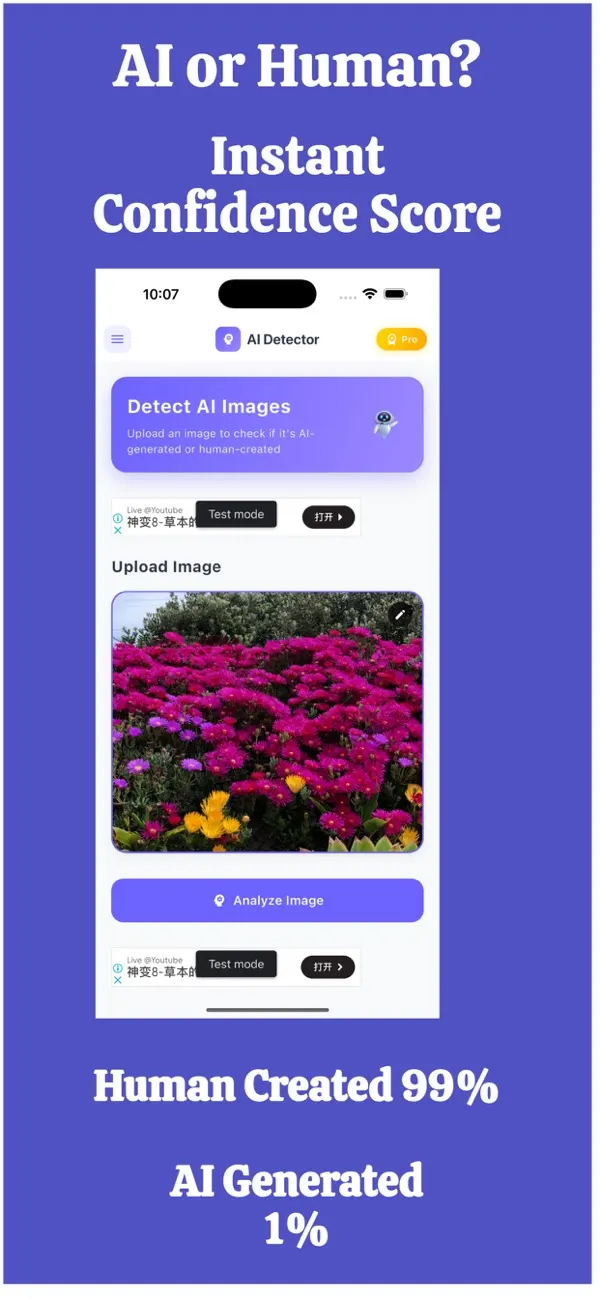
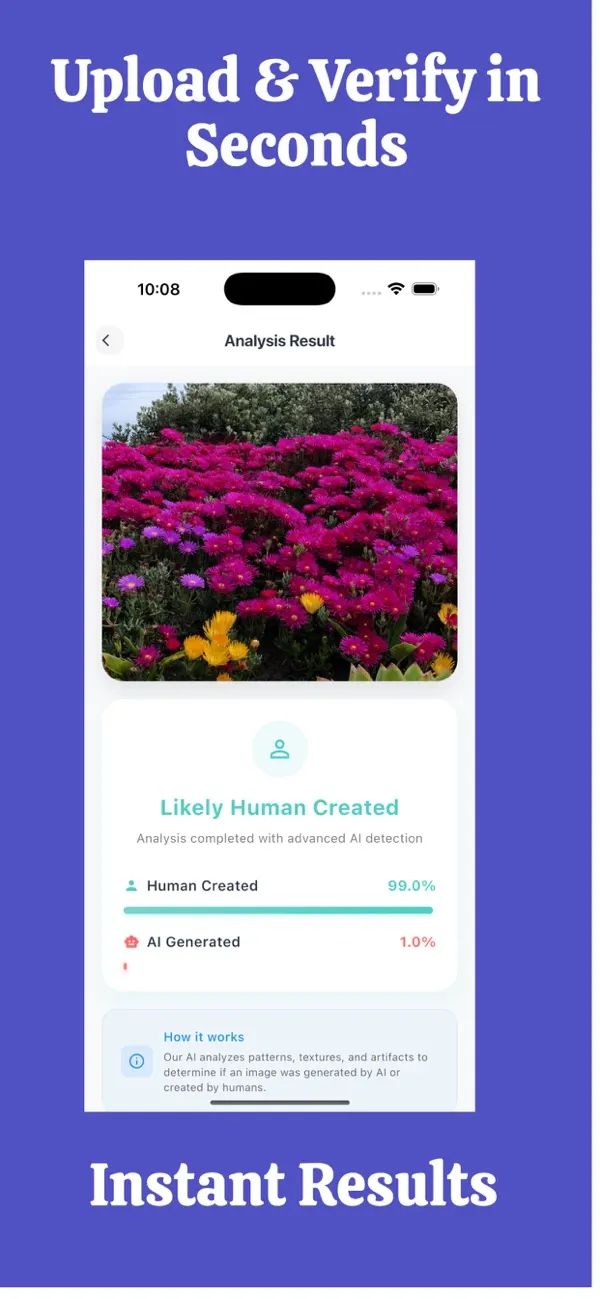
Screens are examples. Results are estimates and can be wrong.
Short answer: before sharing a striking image, find the original source, run a reverse image search, check whether trusted outlets report the same event, and run an AI image check. If you cannot verify it, do not share it. Results from any tool are estimates and can be wrong.
Why are viral images so easy to fake?
AI image tools can now create realistic scenes of events that never took place, such as an explosion, a crowd, a public figure or a flood. Real photos are also recycled with new captions. Both spread because they trigger strong emotion, and sharing takes one tap.
What is a quick way to verify a news image?
- Pause. Strong feelings of anger or fear are a cue to check.
- Find the source. Who posted it first? Is it an eyewitness, an agency or an anonymous account?
- Reverse image search. Look for earlier versions. A photo from years ago with a new caption is a common trick.
- Check trusted outlets. Are established news organisations and fact-checkers reporting the event with the same image?
- Inspect the image. Look for odd hands, garbled signs, repeated faces in crowds and impossible shadows.
- Run an AI check. Use FakeSpot: AI Image Detector on your iPhone for an estimate and confidence score.
- Decide. If you cannot confirm it, do not share it, or share it clearly labelled as unverified.
What can an AI image check tell me about news images?
It can estimate whether an image was generated by AI. That is useful for scenes that look cinematic or too perfect. It cannot tell whether a real photo is old, staged or captioned falsely, so you also need source and context checks. A high score is a reason to look harder. A low score is not a stamp of approval. See how accurate an AI image detector can be.
What clues suggest a misleading caption?
- The weather, clothing, language on signs or vehicles do not fit the claimed place or date.
- Different outlets show different photos of the same supposed event, or none at all.
- The image is cropped to hide a logo, date or surrounding context.
- The post asks you to "share before it is deleted".
How do I handle low-resolution screenshots?
Screenshots of screenshots lose detail and make both human and automatic checks harder. Try to find the original post or higher-resolution version. Results on compressed images are less reliable, so rely more on the source and context.
What if I already shared something false?
Delete or correct the post, say plainly that the image was wrong, and link to a reliable source. Quick corrections reduce harm.
Does a deepfake image count here?
Yes. A deepfake still image shows a real person in a scene that did not happen. The same routine applies: check the source, search for earlier copies, check trusted reports and run an AI check. Video needs separate verification.
Read the guide to telling if an image is AI-generated, and the difference between AI-made, edited and misleading photos.
What habits make you a more reliable sharer?
- Wait a few minutes before sharing anything that makes you angry or afraid.
- Prefer links to original reports over screenshots of posts.
- Follow a few fact-checking organisations and established outlets in your region.
- Add context when you share: where the image came from and whether it has been verified.
- Be willing to say "I am not sure yet".
Small habits like these slow down false images without making you less informed.
Frequently asked questions
How can I tell if a news photo is real?
Find the original source, run a reverse image search, see whether trusted outlets report the same event, and use an AI check as one extra signal.
Can an app verify a news image?
It can estimate whether the image was made by AI. It cannot confirm that a real photo is accurately captioned. Results are estimates.
What should I do if I cannot verify an image?
Do not share it, or share it clearly marked as unverified. Wait for confirmation from reliable sources.
Why do old photos go viral with new captions?
Emotional images spread quickly, and a false caption costs nothing. A reverse image search often reveals the earlier version.
Is a screenshot enough to check?
It can work, but compressed screenshots lose detail and make results less reliable. Find the original if you can.
Related pages
About the author
Praful Deshmukh is the founder of AppVeda Software, which builds and publishes FakeSpot and other iPhone apps. His apps on the App Store
 FakeSpotSpot AI-generated & fake photos
 ImagineTurn text into stunning AI art
 AI Skin ScannerScan your skin from a selfie
 India AQILive air quality for Indian cities
 AI Video DetectorIs that clip real or AI?