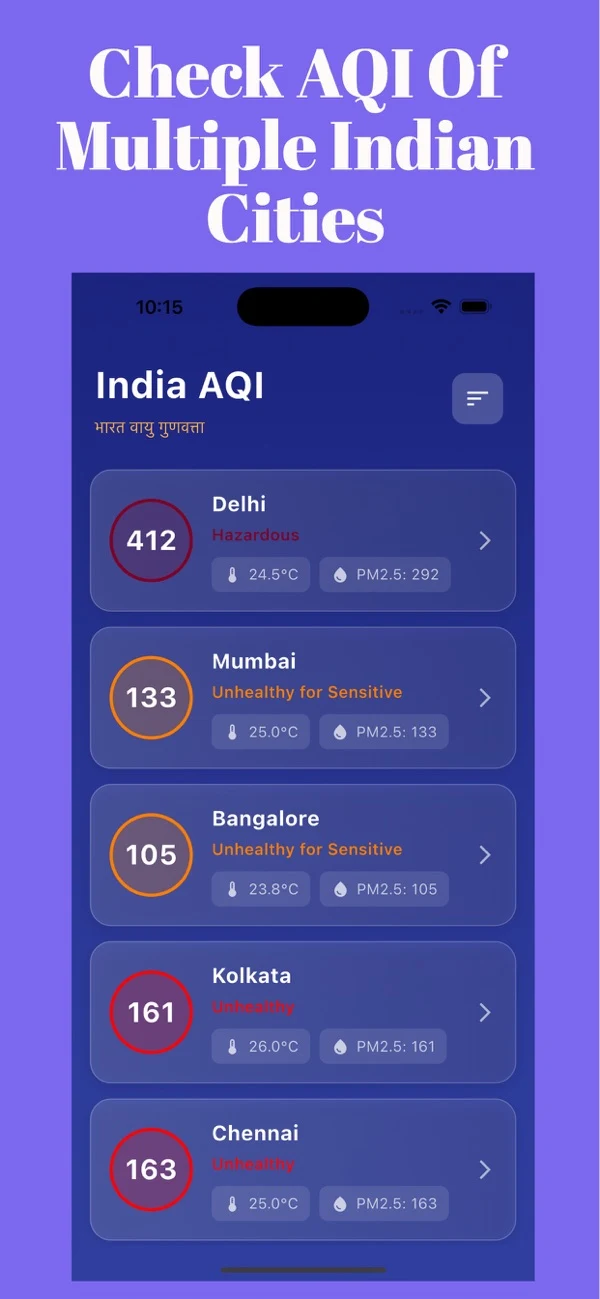
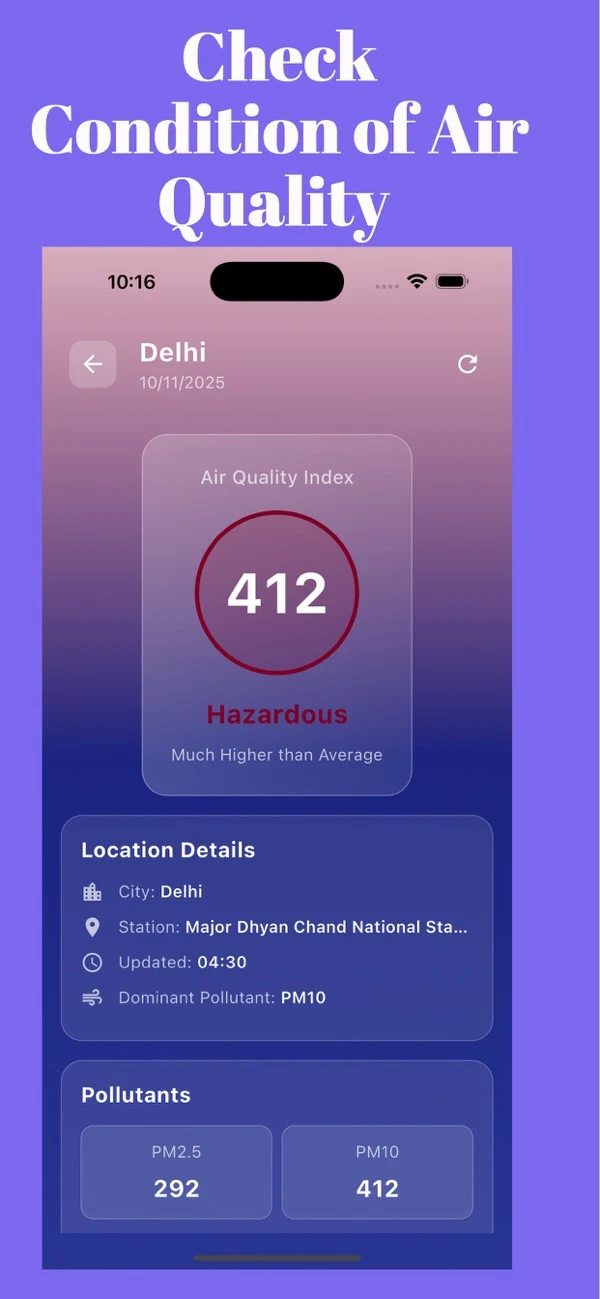
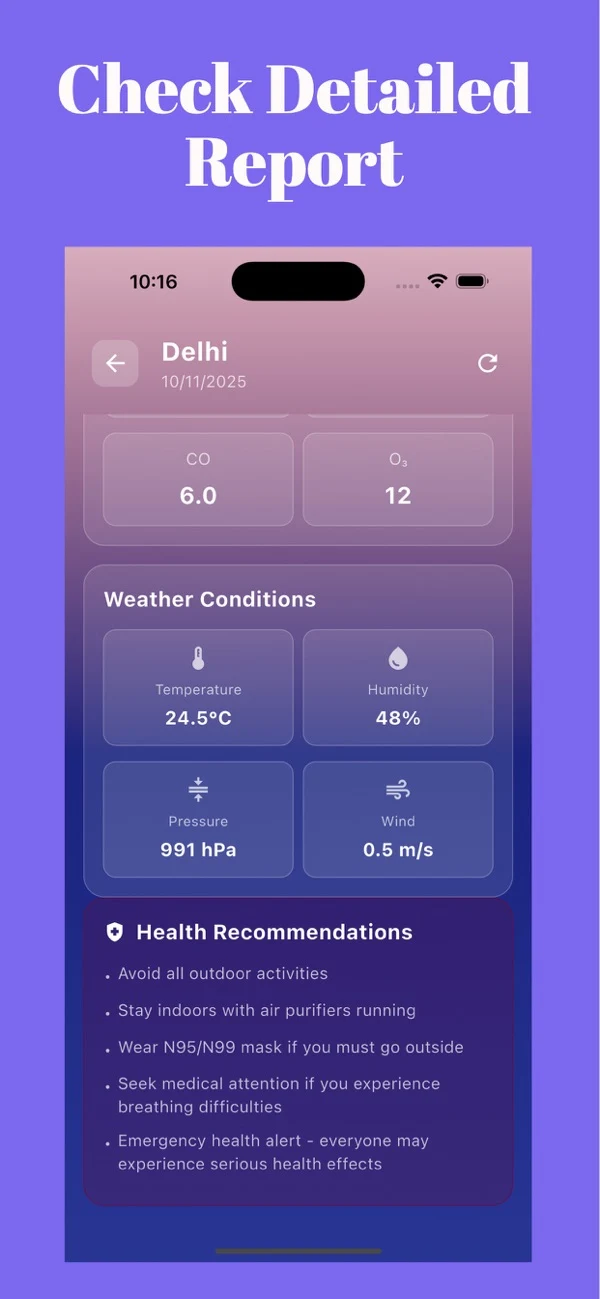
Screens are examples.
Short answer: India's National Air Quality Index, published by the Central Pollution Control Board (CPCB), has six categories: Good (0-50), Satisfactory (51-100), Moderate (101-200), Poor (201-300), Very Poor (301-400) and Severe (401-500). The higher the number, the worse the air.
What are the AQI levels in India?
These ranges and the "possible health impacts" come from the CPCB National Air Quality Index document (monthly bulletin, March 2016). CPCB calls the third category "Moderately polluted"; most dashboards shorten it to "Moderate".
| Category | AQI range | Possible health impacts (CPCB) |
|---|---|---|
| Good | 0-50 | Minimal impact |
| Satisfactory | 51-100 | Minor breathing discomfort to sensitive people |
| Moderate | 101-200 | Breathing discomfort to people with lung or heart disease, children and older adults |
| Poor | 201-300 | Breathing discomfort to people on prolonged exposure |
| Very Poor | 301-400 | Respiratory illness to people on prolonged exposure |
| Severe | 401-500 (above 400) | Respiratory effects even on healthy people |
CPCB explains that the AQI turns complex air quality data on several pollutants into a single number, a name and a colour that people can understand easily.
What should I do at each level?
- Good and Satisfactory: normal routines for most people; sensitive people may notice mild discomfort at Satisfactory.
- Moderate: children, older adults and people with lung or heart conditions should take it easier outdoors.
- Poor and Very Poor: limit long outdoor exposure, especially exercise, and keep an eye on symptoms.
- Severe: avoid outdoor activity where possible and follow your doctor's advice.
This is a general reading of the CPCB table, not medical advice. General information only, not medical advice. If you or your family have breathing or heart problems, ask your doctor what to do on polluted days.
How does the India AQI app show these levels?
The app shows an AQI number and a level for each city in a colour-coded list, and a Health Recommendations list on the city screen (for example avoid outdoor activities, stay indoors with air purifiers running, wear an N95/N99 mask if you must go out). India AQI uses India's CPCB scale, so the table above matches the levels you see in the app. See how to use the app.
Why can two apps show different AQI for the same city?
Different apps may use different monitoring stations, update times or index scales. Check the station name and last-updated time on the detail screen, and compare like with like. The AQI also depends on the dominant pollutant; see PM2.5 vs PM10.
Which cities see the worst levels?
Winter often brings Poor to Very Poor days to parts of north India. Our page on Delhi NCR air quality shows how to follow it.
Common mistakes
- Treating 101-200 as "safe". For children, older adults and people with lung or heart disease it is already a concern.
- Reading the AQI number without checking when it was last updated.
- Assuming every app uses the same scale.
How should I use this table day to day?
Use the table as a quick translation. If your phone shows 245, you know it sits in Poor (201-300); if it shows 310, it has moved into Very Poor. Watching the movement between days matters as much as the single number, so the yesterday-versus-today view in the app is handy. If the number is rising, plan outdoor activities for the cleaner part of the day, and keep children's outdoor time short. Families with a child, an older relative or someone with a heart or lung condition should be careful earlier, because the CPCB table already lists breathing discomfort for them from the Moderate category onwards.
Frequently asked questions
What are the AQI categories in India?
Good (0-50), Satisfactory (51-100), Moderate (101-200), Poor (201-300), Very Poor (301-400) and Severe (401-500), per the CPCB National Air Quality Index.
What AQI is considered safe in India?
Good (0-50) has minimal impact and Satisfactory (51-100) may cause minor discomfort to sensitive people, per CPCB. Ask your doctor what is right for you.
What does AQI 300 mean?
It sits at the top of the Poor category (201-300) in the CPCB table, linked to breathing discomfort on prolonged exposure.
What is Severe AQI in India?
Severe is 401-500 (above 400). CPCB lists respiratory effects even on healthy people.
Does the India AQI app use the CPCB scale?
Yes. India AQI uses India's CPCB scale, so the level you see in the app follows the Indian categories (Good, Satisfactory, Moderate, Poor, Very Poor, Severe). The CPCB table here is for reference.
Related pages
About the author
Praful Deshmukh is the founder of AppVeda Software, which builds and publishes India AQI and other iPhone apps. His apps on the App Store
 FakeSpotSpot AI-generated & fake photos
 ImagineTurn text into stunning AI art
 AI Skin ScannerScan your skin from a selfie
 India AQILive air quality for Indian cities
 AI Video DetectorIs that clip real or AI?